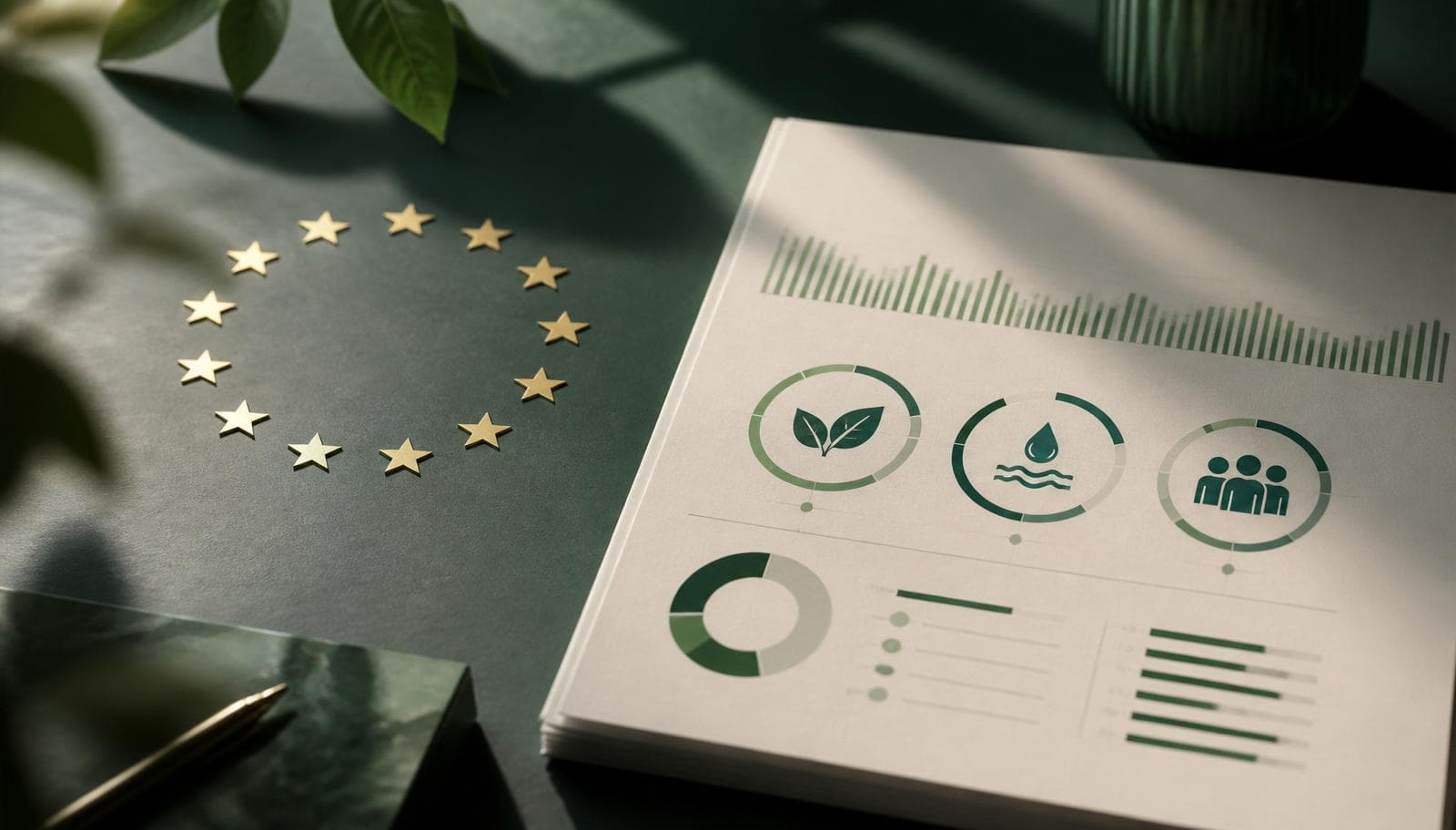
CSR, , and sustainability are often used as synonyms - and they are not. Each has a different origin, audience, and legal weight.
The short version: sustainability is the goal, is the measurement framework, and CSR is a voluntary corporate programme.
Sustainability - the outcome
The broadest concept: meeting today's needs without compromising the ability of future generations to meet theirs (Brundtland, 1987).
It covers environmental, social, and economic dimensions. All companies claim it; few define what they mean by it.
CSR - the voluntary programme
Corporate Social Responsibility emerged in the 1970s as voluntary corporate initiatives: community giving, employee volunteering, philanthropic foundations, ethical sourcing statements.
CSR is usually run by marketing or HR. It is rarely audited and almost never priced into capital decisions.
ESG - the measurement framework
Environmental, Social, and Governance metrics designed for investors and regulators. Data-driven, standardised, and increasingly mandatory (, , ).
lives in the CFO's office and the risk function. It is disclosed in annual reports, audited by third parties, and priced into loans and insurance premiums.
How they connect in practice
A modern company runs CSR programmes (community, culture), measures performance (numbers), and communicates a sustainability strategy (direction).
Regulators care about . Customers respond to sustainability narrative. Employees are moved by CSR.
FAQ
Frequently asked questions
Which one do I 'have' to do?
For EU companies in-scope of CSRD, ESG reporting is legally required. CSR remains voluntary. Sustainability is a strategic choice.
Is ESG the same as sustainability?
No. ESG is a set of metrics; sustainability is the strategic outcome those metrics inform.
Should we still talk about CSR?
Yes, but for the right audience - community, employees, culture. External regulators care about ESG data, not CSR reports.
Turn ESG data into a sustainability story
Vuneli combines defensible ESG metrics with narrative reporting so investors, customers, and employees each get what they need.