A is the total amount of released into the atmosphere as a result of an activity, product, person, or organisation. It is expressed in tonnes of carbon-dioxide-equivalent () so different gases can be compared on the same scale.
The term applies at every scale: a flight has a footprint, a burger has a footprint, and a 40-person accounting firm has a footprint. Only the calculation boundary changes.
What is actually counted
Six gases covered by the Kyoto Protocol are counted: CO₂, methane, nitrous oxide, hydrofluorocarbons, perfluorocarbons, and sulphur hexafluoride. Each is converted to CO₂-equivalent using its global warming potential.
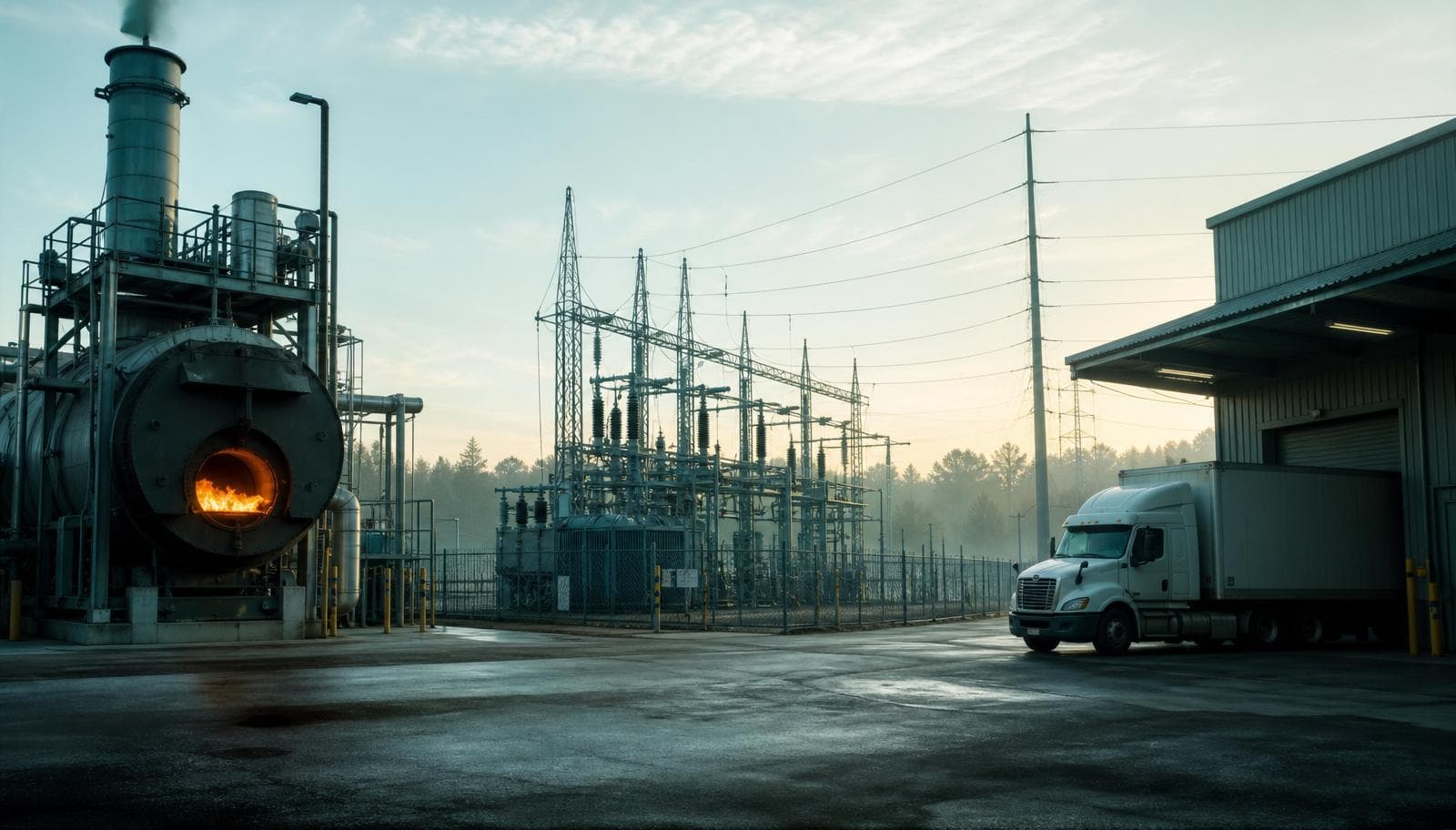
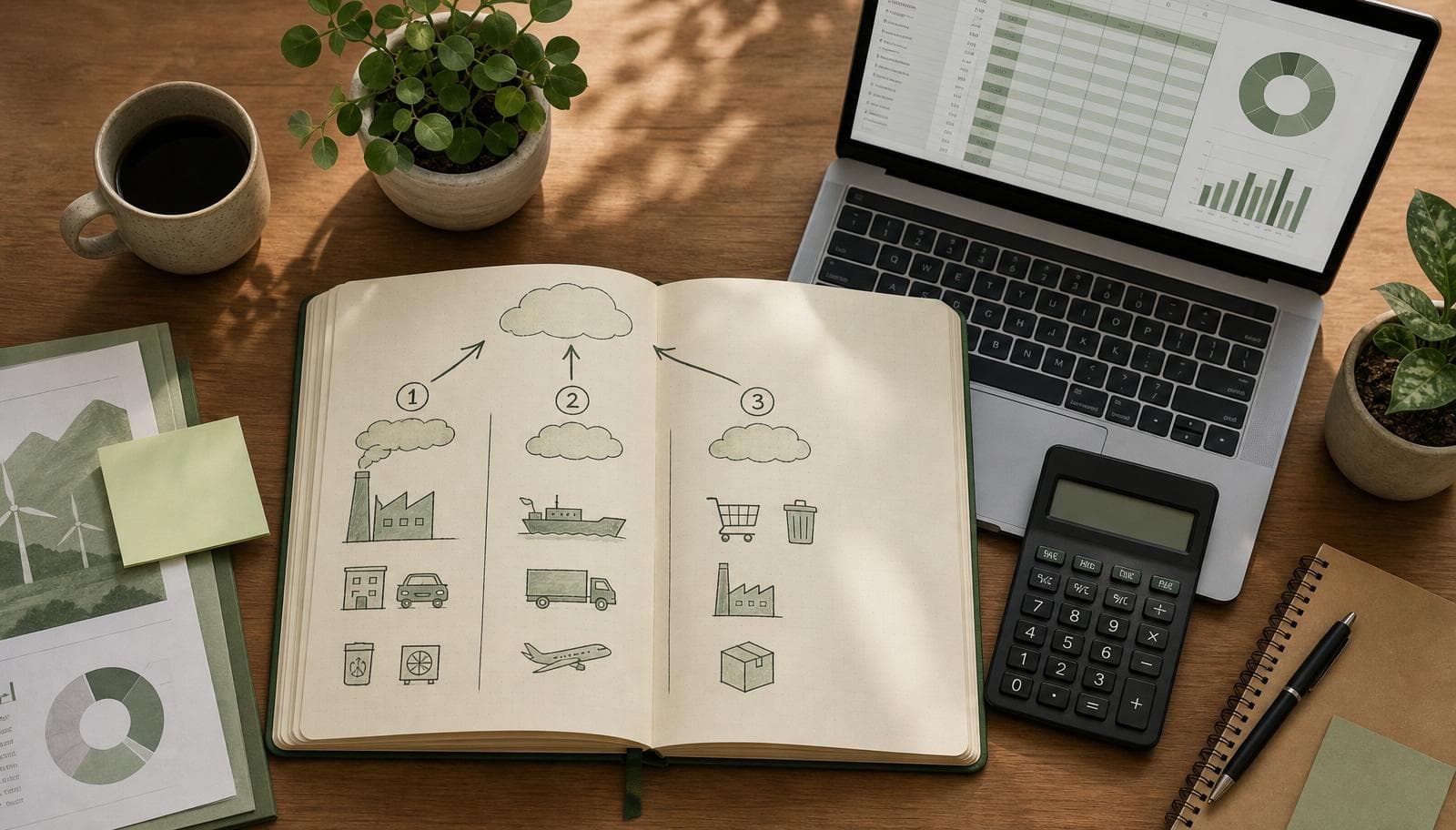
For a business, this covers direct emissions from fuel and vehicles (), purchased electricity (), and value-chain emissions like travel, purchased goods, and product use ().
How you measure it
Collect - litres of fuel, kWh of electricity, kilometres travelled - then multiply each by a published . The is the recognised global methodology.
For SMEs, a full + 2 inventory typically takes 2-4 weeks the first time and can be automated afterwards. is estimated using spend-based or supplier-specific factors.
Why it matters in 2026
EU regulations (, , ) now require thousands of companies to disclose their carbon footprint. Customers, banks, and insurers ask for it. Employees screen it before joining.
Even without a regulatory obligation, knowing your footprint identifies where energy costs are highest - the same measurement that satisfies auditors also cuts bills.
FAQ
Frequently asked questions
What's the difference between carbon footprint and carbon emissions?
'Emissions' refers to the release itself; 'footprint' is the total over a defined boundary (a year, a product, an organisation).
Is a personal footprint different from a business one?
The concept is identical; only the boundary changes. Businesses use the GHG Protocol; individuals use household calculators.
How accurate does it need to be?
For disclosure, the GHG Protocol requires materiality-based accuracy - roughly ±5% for Scope 1/2 and higher tolerance for Scope 3 spend-based estimates.
Do I need software?
Small firms can start in a spreadsheet. Beyond 20-30 emission sources or annual re-reporting, software pays back quickly.
Measure your footprint in a weekend
Vuneli automates Scope 1, 2, and material Scope 3 for Cyprus SMEs with pre-mapped emission factors and one-click reports.