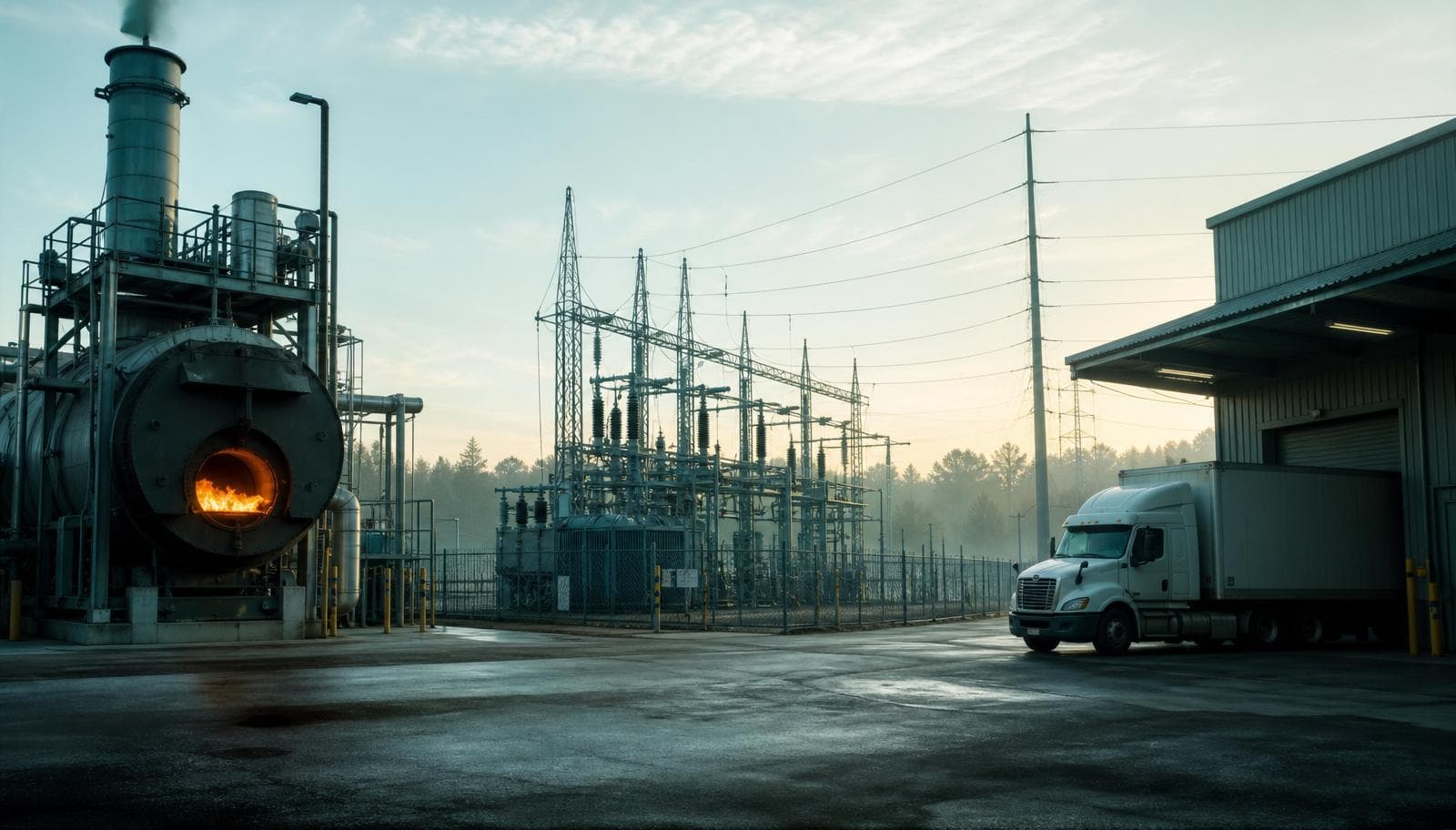
, 2, and 3 are the three categories the uses to split a company's emissions. They exist so two companies can be compared without double-counting.
The shortcut: is what you burn, is what you buy (as energy), and is everything else across your value chain.
Scope 1 - direct emissions
Emissions from sources you own or control: fuel burned in company vehicles, natural gas in boilers, refrigerant leaks, on-site diesel generators.
Example: a bakery's oven gas, a delivery firm's van diesel, a hotel's boiler fuel.
Scope 2 - purchased energy
Indirect emissions from electricity, steam, heat, or cooling your business buys and consumes on-site.
Example: the electricity powering your office lights, servers, and HVAC. Reported two ways - (grid average) and (reflecting green contracts).
Scope 3 - everything else
The 15 categories covering your value chain: purchased goods, business travel, employee commuting, waste, transportation, use of sold products, investments.
Usually the biggest slice. For a professional services firm, is often 80-90% of the total.
Why the split matters
and 2 are your direct responsibility and required by every framework (, , SBTi, EU Taxonomy). Scope 3 is required for CSRD when material and always required by SBTi for companies where it exceeds 40% of the total.
FAQ
Frequently asked questions
Do I have to report all three?
Scope 1 and 2 are required by every framework. Scope 3 is required by CSRD when material and by SBTi when it exceeds 40% of total emissions.
Isn't Scope 3 double-counted with my supplier's Scope 1?
Yes, and that's intentional - it lets you see the emissions embedded in what you buy, and lets your supplier see their own direct impact. Both perspectives matter.
How do I start with Scope 3?
Estimate using spend-based factors first, then refine the biggest categories with supplier-specific data. Perfection is not the goal in year one.
Get Scope 1, 2, and 3 in one place
Vuneli pre-maps common activity data to GHG Protocol categories so you get a defensible scope split without a consultant.