Operating a small or medium enterprise in Cyprus in 2026 comes with distinct commercial and operational realities. As island-specific energy tariffs, high grid carbon intensity, and EU regulatory mandates converge, Cypriot business owners face growing pressure to report environmental performance.
Whether supplying European tour operators in Paphos, exporting food and wine from Limassol, or handling port logistics in Larnaca, local SMEs can no longer ignore . Because Cyprus operates as an isolated power grid reliant on heavy fuel oil generation at Vasilikos and Dhekelia power stations, national electricity grid emissions average between 0.535 and 0.845 kg per kWh—significantly higher than continental Europe. Generic international software often fails to account for Cyprus's specific energy mix, bilingual business environment, and local legal frameworks.
Following the European Commission’s adoption of the updated EFRAG on July 3, 2026, and the activation of the definitive () phase, this technical report identifies the top 7 operational features Cypriot SMEs require when choosing sustainability and carbon accounting software.
1. EAC Electricity Grid & Solar PV Net-Billing Integration
Because Cyprus operates an isolated power grid without subsea interconnections to mainland Europe, thermal electricity generation by the Electricity Authority of Cyprus (EAC) yields a high carbon intensity factor (~0.642 kg /kWh). Generic software relying on UK DEFRA or French ADEME grid averages understates a Cypriot firm's footprint.
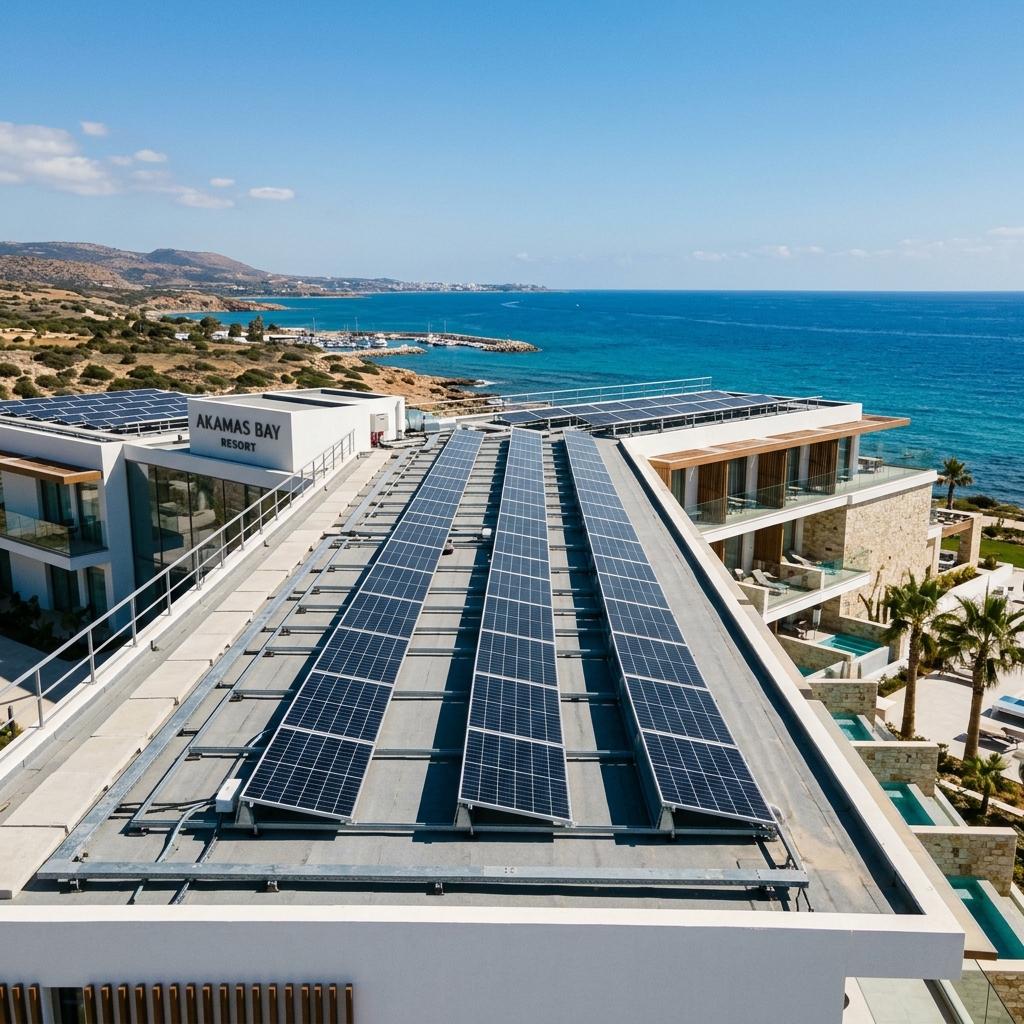
Furthermore, with widespread rooftop solar adoption across commercial facilities in Nicosia, Limassol, and Paphos, software must accurately calculate CERA net-metering and net-billing solar offsets (under EAC Commercial Tariffs 21 and 31) to reflect true net .
2. CBAM Customs Autopilot for Limassol & Larnaca Port Importers
As an island nation dependent on maritime trade, Cyprus imports substantial quantities of steel (CN 7208–7229), aluminum profiles (CN 7604–7610), cement (CN 2523), and fertilizer through Limassol and Larnaca ports. Under the definitive phase active in 2026, importers must surrender CBAM certificates matching embedded emissions.
Additionally, with major port decarbonization projects such as DECARBONLIM installing Onshore Power Supply (OPS / cold ironing) at the Port of Limassol, logistics firms and vessel operators require precise reporting tools to calculate shore-power grid emissions.
3. Native Bilingual Capability (English & Ελληνικά - el-CY)
In Cyprus, daily facility operations, utility bill entries, and staff workflows occur in Greek (el-CY). However, corporate buyers, EU auditors, and international bank credit committees (Bank of Cyprus, Hellenic Bank, Eurobank Cyprus) require reports in English.
Sustainability software must offer seamless dual-language interfaces and export audit-ready disclosures in both Greek and English with zero manual translation cost.
4. EFRAG VSME Standard Support for Hospitality & Export Sectors
Cyprus's economy is anchored by hospitality, shipping, professional services, and food exports (halloumi, citrus, wine). European tour operators and retail chains are requiring supply chain disclosures.
Software must natively format reports according to the July 3, 2026 EFRAG Voluntary SME () standard—supporting the Basic Module (B1–B11) for entry-level reporting and Comprehensive Module (C1–C9) for supply chain requests.
5. Transparent EUR Pricing & Cyprus VAT (19%) Compliance
Cypriot SMEs need transparent, fixed pricing in Euros (EUR) to prevent currency fluctuation losses from USD-denominated subscriptions. Invoicing must include compliant Cyprus VAT (19%) documentation for local business accounting.
6. Automated Bill OCR & Zero-Friction Data Entry
Most Cypriot SMEs operating with 10 to 100 employees lack dedicated managers. Data entry is handled by busy accounting or admin staff.
Software must feature AI-powered optical character recognition (OCR) that automatically extracts kWh, fuel liters, and invoice totals directly from uploaded EAC bills and petrol receipts.
7. EU Data Sovereignty & GDPR Protection
Cypriot commercial data—including energy expenses, facility production figures, and supplier lists—must remain protected under European privacy laws.
Ensure your software host stores data strictly within the European Economic Area (EEA, e.g., Cloudflare EU / Supabase Frankfurt nodes) with full GDPR compliance and local customer support.
FAQ
Frequently asked questions
Why can't Cyprus SMEs use generic UK or US carbon software?
Generic international tools often use outdated UK DEFRA grid factors (which understate Cyprus's oil-fired electricity emissions) and lack Greek language support or CBAM port declarations.
How does solar PV net-billing impact a Cyprus company's Scope 2 emissions?
Solar energy consumed directly reduces grid kWh purchases, while surplus exported solar energy must be accounted for according to GHG Protocol Scope 2 guidance.
Are small Cyprus businesses required to report emissions in 2026?
While non-listed SMEs are not directly mandated by CSRD law, they are indirectly forced to report by bank lenders (Bank of Cyprus green loans) and European corporate customers who require Scope 3 value chain data.
Built in Cyprus for Cypriot and European SMEs
Vuneli combines EAC grid factors, CBAM port tools, bilingual EN/EL interfaces, and VSME reporting in one platform.